
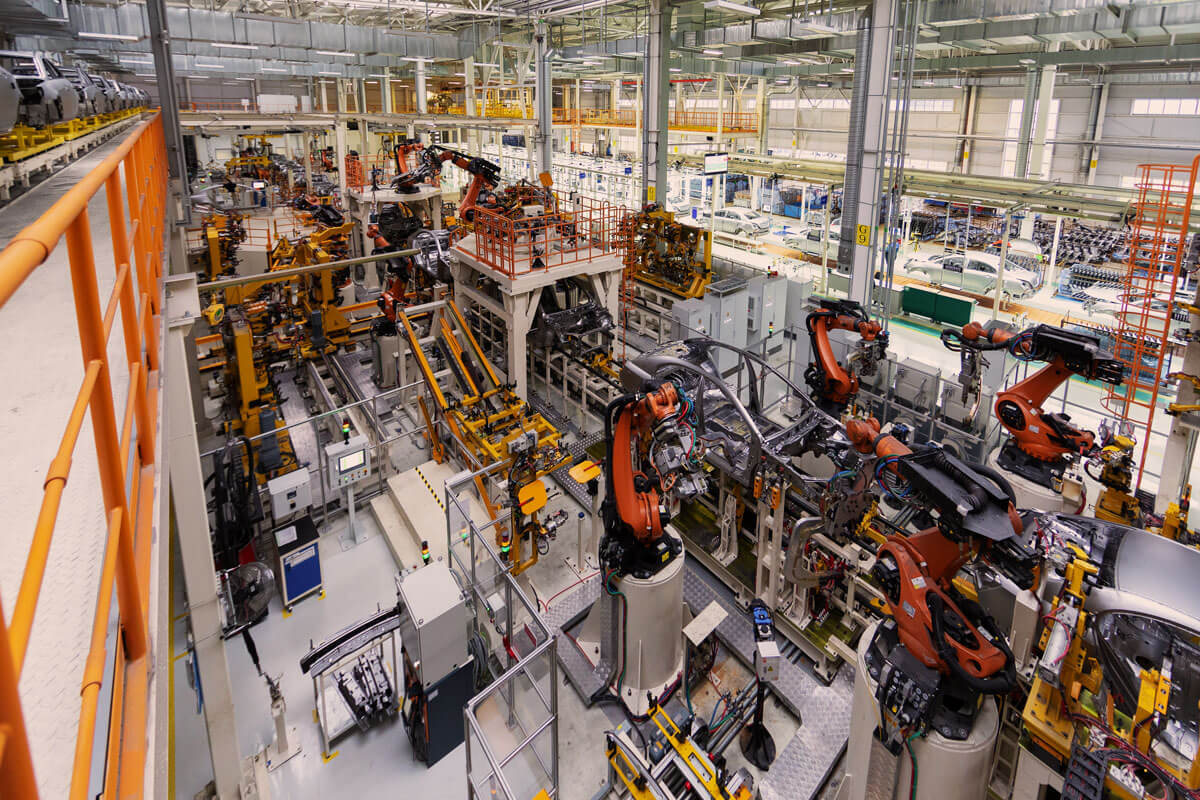
Understanding warm-air heating performance in manufacturing and production facilities
Manufacturing and production facilities rely heavily on warm-air heaters to maintain stable temperatures across busy work areas, especially where machinery, ventilation or large open bays make it difficult to retain heat. Open loading doors, moving equipment and shifting production workloads all influence how heat moves and how often heaters must recover. As a result, warm-air systems in manufacturing buildings rarely operate in a steady pattern, and their running costs rise sharply when heat is lost faster than it can be delivered.
Most warm-air heaters cannot respond intelligently to these fluctuating conditions. They fire according to basic thermostat commands and often restart before the heat stored inside the combustion chamber has been fully utilised. Over long shifts, this behaviour leads to excessive fuel consumption, elevated flue temperatures and uneven warmth across production lines, creating unnecessary expense while still leaving cooler zones where staff work or temperature-sensitive processes rely on consistent conditions.
Optiburner introduces a more advanced level of control by managing how warm-air heaters produce, store and release heat inside large industrial spaces. As a retrofit unit, it works with existing equipment to monitor chamber temperatures, regulate firing times and improve residual heat recovery between cycles. Instead of allowing the heater to repeat inefficient patterns, Optiburner adapts its operation to the building's actual heating demand, producing a steadier thermal profile while significantly reducing wasted energy.
If you operate a manufacturing or production facility and want to reduce the cost of your warm-air heating without replacing equipment, Optiburner provides a straightforward solution. By improving how your existing heaters manage heat and respond to demand, you can cut fuel use, stabilise temperatures, and achieve fast, dependable savings through a simple retrofit.
Why warm-air heating is a major cost driver for manufacturing and production sites
Heating large industrial buildings is inherently difficult because manufacturing environments rarely remain thermally stable for long. Warm air is continually displaced by operational movement, mechanical ventilation and frequent door openings, which interrupt the natural settling of heat. As a result, warm-air heaters are forced into longer, more frequent firing cycles to replace the warmth lost through internal turbulence rather than through the building fabric. Overextended operating hours result in additional cycles, which cumulatively lead to substantial fuel use, making heating one of the most persistent and costly demands in many production facilities.
Air movement in production halls accelerates heat loss
Manufacturing spaces are constantly disturbed by moving equipment, extraction systems and airflow generated by machinery and conveyors. This internal air movement prevents warm air from remaining at the working level and pulls heat away from areas where consistency matters most. Traditional warm-air heaters attempt to compensate for these losses by firing again, even though the temperature drop is often caused by disturbance rather than a genuine lack of heat. This reactive pattern increases burner activity, elevates running costs and places unnecessary strain on equipment throughout the heating season.
Production processes create unpredictable temperature swings
The thermal load within a manufacturing building is rarely uniform. Equipment that heats during operation and cools when idle creates shifting temperature pockets that thermostats cannot interpret accurately. A temporary cooldown near a production line may prompt the heater to restart prematurely, even as other areas of the building remain sufficiently warm. This misalignment between perceived and actual heating demand leads to repetitive cycling and inefficient fuel use. Because these fluctuations recur throughout the day, especially during multi-shift operations, warm-air heaters often run far longer than the building genuinely requires.
Building design intensifies stratification and energy demand
Many manufacturing and production sites have high roofs, open mezzanines and expansive internal volumes that encourage warm air to rise rapidly. Heat accumulates above the occupied zone, where it provides little practical value, while work areas at ground level remain noticeably cooler. Warm-air heaters continue firing to correct these lower-level temperatures, even as a surplus of unused heat builds near the ceiling. This imbalance results in elevated fuel consumption and longer recovery times, making the heater work harder even though it is already generating more heat than the space can utilise effectively.
These combined challenges create a heating environment in which energy is continually lost through air movement, stratification and fluctuating thermal loads. The core issue is not the heater's capacity, but its inability to regulate the production and release of heat under such dynamic conditions. Without enhanced cycle control and smarter use of residual warmth, manufacturing sites face higher heating costs year after year, even when their equipment is functioning as designed.
The overlooked link between inefficient heaters and operational performance
Heating inefficiency in manufacturing environments is often treated solely as an energy issue, yet its effects extend into the day-to-day rhythm of production. When warm-air heaters cycle too frequently or struggle to maintain stable temperatures, work areas experience fluctuations that influence comfort, workflow and consistency on the production floor.
Operators working in cooler zones may require additional warm-up breaks, temperature-sensitive tasks become harder to control, and overall productivity can be affected by continual changes in ambient conditions.
Temperature inconsistencies also place pressure on supervisors and maintenance teams, who often respond by manually adjusting thermostats or schedules to stabilise the environment.
These interventions rarely address the underlying issue and instead encourage heaters to run harder, increasing fuel consumption without improving conditions at ground level. Over time, this becomes the accepted behaviour of the heating system, even though the real cause is inefficient cycle control that a more intelligent optimisation system could prevent.
Why do many manufacturing sites accept higher heating costs than necessary
Many manufacturing and production sites continue to tolerate elevated heating costs because the behaviour of warm-air systems is often misunderstood. When temperatures fluctuate across the building, teams frequently assume the heater lacks capacity or that the building fabric is responsible for excessive heat loss.
In reality, the primary issue is rarely the size of the heater or the condition of the structure, but the absence of precise control over how heat is produced and distributed. Without insight into the heater's internal cycling pattern, inefficiencies go unnoticed and high fuel usage becomes accepted as a routine operating expense.
Traditional warm-air systems also offer limited visibility into how often they fire or how much heat is wasted during each cycle. When energy bills rise, the heater appears to be functioning normally, so attention shifts to other parts of the plant. Because no obvious malfunction is present, managers often assume the system is working as well as it can.
In practice, the heater repeats the same inefficient behaviours every day because it has no means to adapt to the building's changing conditions.
How warm-air heaters operate in large industrial environments
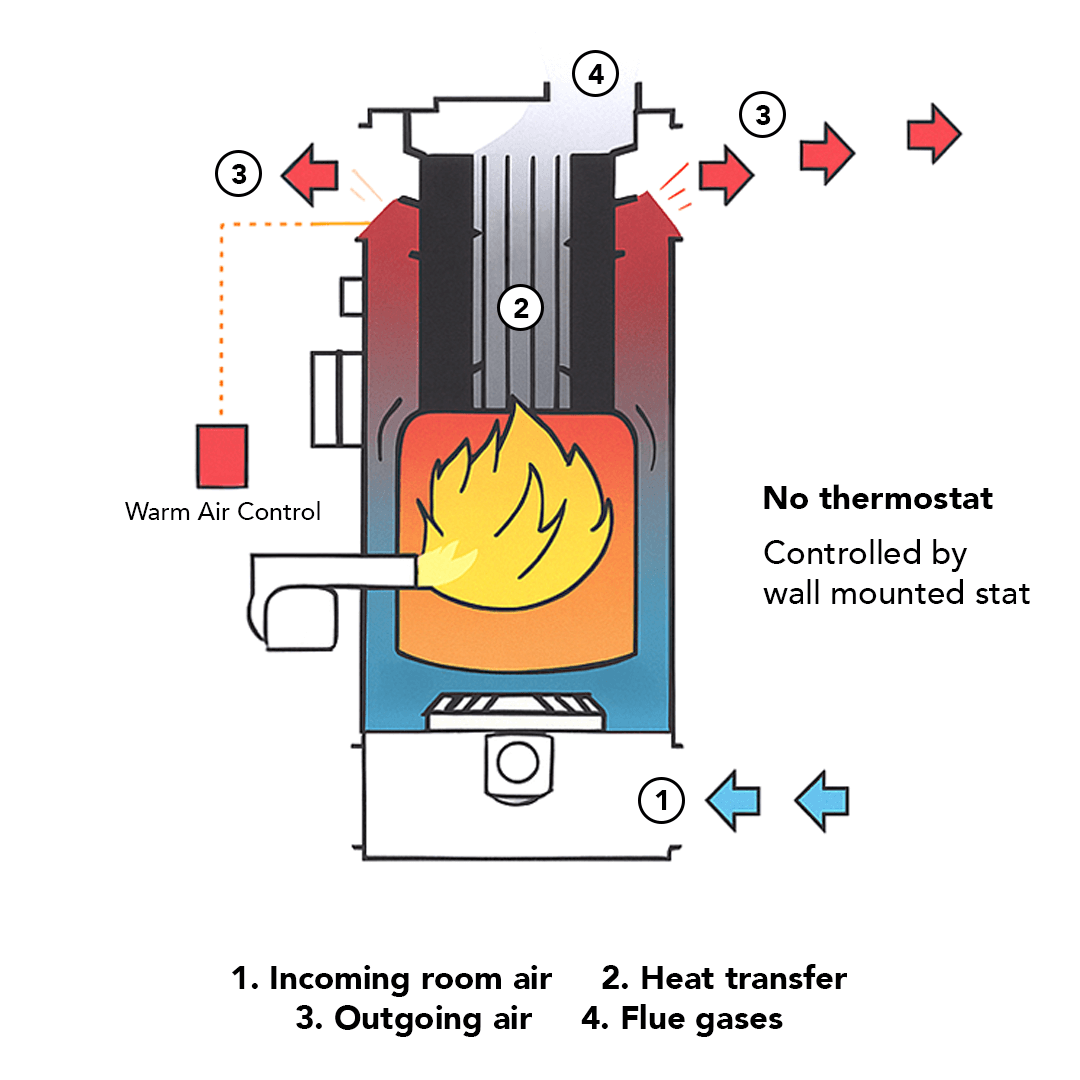
Warm-air heaters are designed to draw in cooler air, heat it in the combustion chamber, and distribute it across a wide internal space. In manufacturing and production sites, this process is complicated by continuous airflow, changing thermal loads and large open areas that make it difficult for heat to remain at working level. As heaters work to replenish warmth, their internal chambers reach high temperatures quickly. Without more advanced control, the heater continues to fire even when sufficient residual heat is present, leading to inefficient heat delivery and higher fuel consumption over long operating periods.
Heat behaviour inside production facilities
Once released into a manufacturing environment, warm air naturally rises towards the roof level, where it collects in areas that offer little benefit to the workspace below. Meanwhile, the occupied zone remains cooler and requires ongoing heating to stay comfortable. The thermostat detects this lower temperature and triggers additional firing, even though a significant amount of usable heat is already suspended above the working area. This imbalance forces heaters into frequent recovery cycles, placing extra demand on the system while yielding only limited improvements in comfort or consistency across production lines and workstations.
Why internal chamber behaviour affects fuel use
Inside a warm-air heater, the combustion chamber quickly builds heat during each firing cycle. When the chamber reaches its maximum temperature, the burner often continues to operate until the thermostat signals otherwise, generating surplus warmth that the building cannot immediately use. Because this excess heat is expelled through the flue before it can contribute to space heating, a portion of the purchased energy is effectively wasted. In industrial environments, where heaters run for long continuous periods, this pattern compounds significantly, resulting in unnecessary fuel usage and mechanical stress that could be avoided with more intelligent control.
The link between uncontrolled cycling and wasted heating effort
Traditional warm-air heaters rely solely on thermostat commands to determine when to activate. Still, thermostats do not account for the energy stored in the heater or the heat that remains unused in the building. As a result, heaters restart too soon, often before the system has fully released the warmth generated in the previous cycle. This short cycling reduces overall heating efficiency because the heater produces heat without having the opportunity to deliver it effectively. Over time, this pattern leads to higher fuel consumption, reduced equipment lifespan and inconsistent performance across the manufacturing environment.
Why warm-air heaters waste significant energy in manufacturing spaces
Warm-air heaters often waste more energy than operators realise, mainly because they cannot interpret and respond to the constantly shifting conditions in manufacturing environments. Mechanical extraction, high air turnover and process-related temperature changes all influence how quickly warmth is lost at floor level. When a thermostat senses a drop in temperature, it signals the heater to restart, even if the change is caused by an air disturbance rather than a genuine lack of heat. This disconnect between perceived demand and actual heating requirements triggers unnecessary firing cycles and increases fuel consumption throughout the working day.

How uncontrolled chamber temperatures create wasted heat
Inside the heater, the combustion chamber can reach its maximum temperature long before the building actually needs additional heat. Without a mechanism to recognise this, the burner continues to fire until the thermostat completes its cycle. During this time, the chamber accumulates excess heat that the building cannot quickly absorb. Instead of contributing to productive heating, a portion of this energy is expelled through the flue as waste. In manufacturing and production sites, where heaters remain active for long periods, this repeated pattern significantly increases overall fuel expenditure.
Why is short cycling common in industrial settings
Manufacturing spaces frequently cause heaters to cycle sooner than necessary due to fluctuating thermal loads and irregular airflow. When machinery cools down between production stages or when extract systems remove air from the workspace, the thermostat registers a sudden drop in temperature. The heater then restarts prematurely, even though warm air is still stored in the chamber. These short, closely spaced cycles disrupt efficient heat transfer and prevent the system from effectively utilising residual energy. As their frequency increases, the heater consumes more fuel while delivering less consistent warmth throughout the facility.
The compounding effect of fuel losses on running costs
Every unnecessary firing cycle contributes to rising flue temperatures, pushing valuable heat out of the building before it can be used. In high-demand industrial environments, heaters often operate for extended shifts, so even small inefficiencies can add up to substantial losses over time. Because traditional warm-air heaters cannot modulate output or manage recovery periods intelligently, they continue to release heat at a constant rate regardless of actual demand. This lack of precision results in avoidable fuel waste and prolonged operating hours, both of which increase costs without offering meaningful improvements to working conditions on the production floor.
If your manufacturing site is experiencing rising heating costs or inconsistent temperatures across production areas, now is the ideal time to explore how Optiburner can improve efficiency. Our optimisation technology helps warm-air heaters work smarter, not harder, reducing unnecessary firing and recovering heat that would otherwise be wasted. Contact us for a no-obligation assessment, tailored recommendations and a clear projection of the savings you can expect.
How Optiburner strengthens heating performance in manufacturing and production sites
Warm-air heaters in manufacturing environments often struggle to maintain stable performance due to constantly shifting building conditions throughout the day. Production heat comes and goes, extraction systems remove air unpredictably, and machinery movement disrupts the flow of warm air across the floor. Optiburner addresses these challenges by adding a dedicated control layer that manages the generation, retention and release of heat within the heater. Rather than relying solely on thermostat commands, it interprets the heater's internal thermal behaviour and stabilises performance in response to the erratic conditions that define most manufacturing spaces.
Maintaining thermal stability inside the heater
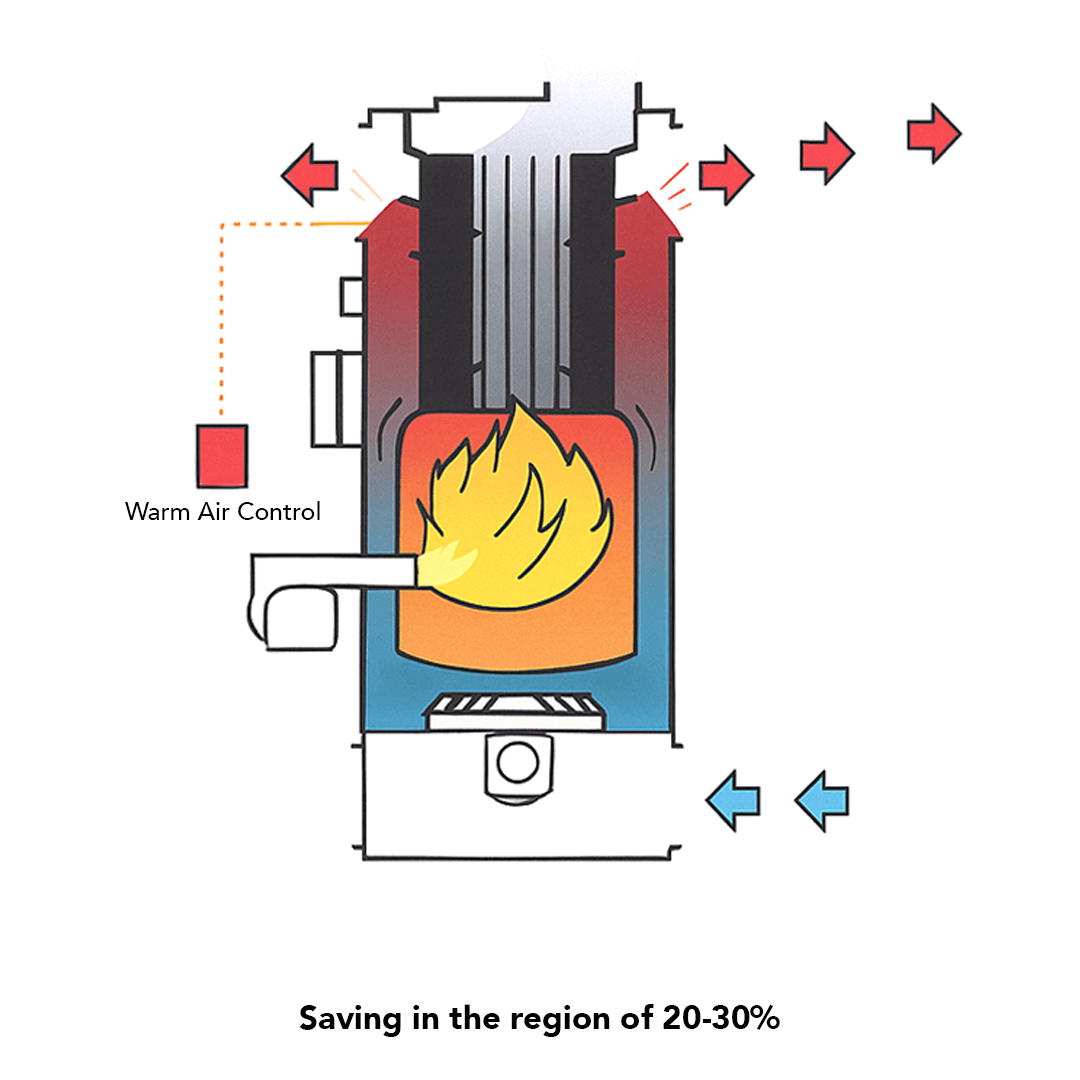
The combustion chamber in a warm-air heater stores considerable energy between cycles, but this reserve is rarely used efficiently. Sudden temperature dips on the production floor can trick the thermostat into restarting the burner before the stored heat has been fully delivered. Optiburner monitors the chamber temperature directly, slowing the burner's response to prevent unnecessary restarts that would waste fuel. By protecting this reservoir of heat and releasing it more gradually, the system maintains stable comfort across workstations while reducing the number of firing events required during long operating shifts.
Aligning heater behaviour with real industrial demand
Manufacturing facilities experience irregular heating demand due to varying process loads throughout the day. When machinery temporarily cools, or a draft moves through a working area, a traditional heater reacts immediately, firing as if the whole building requires heating. Optiburner prevents this by comparing chamber conditions with the sudden change detected by the thermostat. If the chamber still contains adequate heat, the burner remains paused, allowing the system to circulate existing warmth without consuming additional fuel. This alignment between internal heater conditions and floor-level temperature changes eliminates much of the unnecessary cycling that drives up heating costs.
Improving heater efficiency through controlled energy release
A major source of inefficiency in warm-air heaters is the rapid release of heat followed by equally rapid cooldowns. These swings reduce efficiency and increase mechanical wear. Optiburner smooths this behaviour by moderating how quickly the heater reaches peak chamber temperature and how gradually the stored heat is dispersed into the building. By slowing extreme temperature transitions inside the unit, Optiburner helps the heater run in longer, calmer cycles that use fuel more effectively. For manufacturing sites operating extended hours, this controlled heat release results in lower fuel consumption, improved temperature consistency and reduced thermal stress on components.
Real-world improvements in thermal behaviour inside manufacturing facilities
Manufacturing facilities experience heat distribution problems that differ significantly from those of other commercial buildings. Large machines, rapid air displacement from moving equipment, and high extraction rates constantly reshape the internal temperature profile. Instead of warm air rising cleanly to the roof, manufacturing environments create a series of thermal pockets that shift throughout the day. These moving temperature zones make it difficult for warm-air heaters to deliver uniform comfort and often push the system to run longer simply to counteract conditions created by production activity rather than by the building itself.

How machinery and workflow patterns distort temperature levels
Production lines create fluctuating heat patterns that can trap warmth in unexpected areas. Equipment that runs hot during active cycles may create localised warm zones, while surrounding areas cool quickly once machinery slows or materials are moved. These shifting hotspots behave differently from typical ceiling-level stratification, forming unpredictable thermal layers at various heights around the facility. Warm-air heaters attempt to address these rapid transitions. Still, because heat is unevenly distributed, the system ends up chasing local imbalances rather than maintaining a steady environment across the entire production floor.
Why traditional heaters cannot stabilise these changing conditions
Most warm-air heaters operate with a single temperature reference point, meaning they respond to local changes without understanding the wider environment. A drop in temperature near a loading point or workstation triggers another firing cycle, even if surrounding areas still hold significant warmth. As the heater responds repeatedly to isolated disturbances, it consumes more fuel without achieving the stable conditions required across diverse production zones. In facilities with long operating hours, this pattern continues day after day, inflating running costs without creating the consistent thermal environment the building requires.
How Optiburner improves temperature consistency in active facilities
Optiburner helps stabilise these complex temperature conditions by managing how fast the heater releases and recovers heat. Instead of allowing the burner to react immediately to every local fluctuation, Optiburner assesses the heater's internal thermal reserve and moderates output accordingly. This prevents the system from overcompensating for short-lived temperature dips caused by air movement or process ventilation. By delivering heat in a steadier, more controlled pattern, Optiburner reduces the intensity of temperature swings across different zones of the building, creating a more even and predictable working environment while lowering the energy needed to maintain it.
If your heating system is working harder than ever to keep production areas stable, now is an ideal moment to explore how targeted optimisation can reduce demand. Optiburner is designed to support the complex heating behaviour found in manufacturing facilities, helping your existing warm-air heaters perform more effectively without major upgrades or disruption to operations. Get in touch with our team for a tailored review and clear, evidence-based efficiency projections.
Proven savings: why manufacturing and production sites see 20–30 per cent reductions with Optiburner
Manufacturing sites typically operate warm-air heaters for long, uninterrupted periods, which magnifies the impact of any inefficiency in the heating cycle. Because heaters in these environments often fire more frequently than required, even small corrections to firing behaviour produce significant reductions in fuel use. Optiburner improves the utilisation of stored heat, minimises wasted energy during recovery periods and prevents the system from responding to short-lived temperature fluctuations that would otherwise trigger unnecessary cycling. These combined improvements translate into measurable savings, with many manufacturing facilities achieving reductions of twenty to thirty per cent in overall heating consumption.
How continuous heating schedules amplify efficiency gains
Unlike buildings that warm up gradually each morning, manufacturing environments often require stable temperatures from the start of the shift through to its completion. This extended demand puts warm-air heaters under pressure and exposes inefficiencies repeatedly throughout the day. Optiburner helps the system perform more effectively under these conditions by smoothing abrupt firing patterns and ensuring heat is released deliberately rather than in rapid bursts. By improving the heater's endurance over long operating periods, the technology enables the system to maintain comfort with substantially less energy than an uncontrolled cycle would require.
Reducing wasted heat across multiple heater units
Many manufacturing and production sites rely on multiple warm-air heaters to maintain temperature across large, open areas. When these units operate independently, uneven heat distribution and uncoordinated cycling often lead to wasted energy. Optiburner allows each heater to use its internal heat reserves more efficiently, preventing premature firing and reducing the likelihood of overlapping cycles. Even though each unit functions individually, the improvements to their internal behaviour accumulate across the system. This results in consistent temperatures throughout the facility and significant fuel savings across all heaters during heavy-demand periods.
Sustained performance improvements throughout the heating season
The nature of manufacturing operations means heating demand remains high for most of the winter, leaving ample opportunity for inefficiencies to accumulate into high costs. Optiburner delivers steady improvements throughout the season by continually moderating how heat is generated and retained, ensuring the heater does not revert to the wasteful patterns that normally occur under pressure. Instead of working harder as temperatures drop, the system maintains control over firing behaviour and effectively preserves stored warmth. This sustained optimisation ensures that manufacturing sites benefit from lower fuel use, longer equipment life and more predictable heating performance over time.
Optiburner also optimises commercial boilers used in manufacturing and production sites
Although warm-air heaters are common in manufacturing environments, many sites also use commercial boilers to support ancillary heating requirements such as office areas, production-side amenities or specialist operational zones. These boilers face their own efficiency challenges, particularly during long operating schedules and high-demand periods. Optiburner's optimisation principles apply effectively to these systems as well, helping to control unnecessary firing, improve the use of retained heat and reduce energy loss through the flue. By enhancing how the boiler interprets and responds to temperature changes, Optiburner improves heating stability across the wider site.
Managing fluctuations in localised heating demand
Commercial boilers in manufacturing settings often serve areas with highly variable occupancy, including staff facilities, technical rooms and administrative zones. These smaller spaces heat and cool more rapidly than large production halls, leading to frequent temperature changes that trigger boiler restarts. Optiburner moderates the boiler's response to these fluctuations by assessing its internal thermal reserve before initiating a firing cycle. If sufficient heat remains, the system delays burner activation and ensures existing warmth is used first. This controlled behaviour reduces fuel consumption and prevents the boiler from reacting excessively to short-term temperature variations.
Improving heat retention during extended operating hours
Many manufacturing sites run commercial boilers continuously, even outside core production hours, to maintain frost protection or support essential staff areas. Over prolonged operation, boilers often drift into inefficient patterns where they fire repeatedly to compensate for small temperature dips. Optiburner helps break this cycle by managing how the boiler ramps up and cools down, prioritising gradual heat release over abrupt temperature shifts. This prevents the frequent, shallow firing cycles that waste fuel and place stress on the system. The result is a more economical, predictable heating performance that supports continuous site operation.
Reducing flue-related heat losses in mixed heating systems
In facilities that operate both boilers and warm-air heaters, flue losses can become a significant source of wasted energy. When a boiler fires more often than necessary, it not only consumes additional fuel but also loses valuable heat through the exhaust at each restart. Optiburner addresses this by extending the time between firing cycles wherever possible and ensuring that stored heat is fully utilised before re-engaging combustion. By reducing the frequency of flue temperature peaks, the system delivers immediate efficiency gains that can be particularly impactful for manufacturing sites with long daily heating schedules and mixed plant configurations.
The operational benefits beyond fuel savings
Reducing heating costs is an immediate advantage, but manufacturing and production sites often notice wider operational improvements once Optiburner is installed. Because the system stabilises the production and release of heat, the heater no longer swings between rapid firing and abrupt cooldowns.
This steadier behaviour creates a more predictable thermal environment across production areas, supporting smoother workflows, greater staff comfort and fewer interruptions from uncomfortable temperature fluctuations. Over time, these improvements contribute to a more consistent operating rhythm, benefiting both productivity and overall working conditions during intensive manufacturing schedules.
Lower mechanical stress and extended equipment life
Warm-air heaters in manufacturing settings work under demanding conditions and typically operate for long hours. Frequent cycling causes repeated thermal expansion and contraction in the combustion chamber, accelerating component wear. Optiburner reduces these unnecessary cycles by controlling how the heater responds to small temperature shifts, allowing the system to run in longer, gentler patterns. This reduces mechanical strain and extends the service life of critical parts. For sites with multiple heating units, this improvement reduces maintenance requirements and lowers the likelihood of unexpected breakdowns that can disrupt production activity.
A more stable and comfortable working environment
Manufacturing teams rely on consistent temperatures to maintain concentration, perform manual tasks accurately and operate machinery safely. Sudden cold spots or uneven heat distribution can affect comfort and efficiency, particularly during long shifts. By moderating the heater's output and delivering warmth more steadily, Optiburner helps create a more stable environment with fewer temperature fluctuations throughout the day. This stability supports employee well-being and allows production managers to maintain better control over tasks that depend on predictable environmental conditions, contributing positively to overall workflow and morale on the production floor.
Improved heating predictability for extended operations
Facilities that run multiple shifts or operate through the night benefit from predictable heating behaviour. Without optimisation, warm-air heaters often perform differently throughout the day due to changing demand, process heat and airflow conditions. Optiburner smooths these variations by ensuring the heater follows a controlled thermal pattern rather than reacting impulsively to every local temperature change. This consistency helps site managers forecast heating behaviour more accurately, simplifies daily operational planning and supports continuous production without the performance variations typically associated with older, uncontrolled heating cycles.
Why optimisation matters more now than ever for UK manufacturing
Heating efficiency has become a strategic priority for manufacturing businesses as rising energy costs place increasing pressure on operating margins. Warm-air heaters often account for one of the largest contributors to winter fuel consumption, and even minor inefficiencies can accumulate into substantial annual expenses when equipment runs for long periods.
For many sites, heating is no longer viewed as a background utility but as a controllable cost that directly influences competitiveness. By addressing how heat is generated and managed within these systems, optimisation provides manufacturers with a practical route to reducing overheads without compromising comfort or operational performance.
Is your manufacturing site a good fit for Optiburner?
Many manufacturing environments unknowingly operate their warm-air heaters at an energy disadvantage simply because these systems cannot interpret the shifting conditions created by production activity. Suppose your facility experiences frequent temperature swings, uneven warmth between work areas or rising fuel costs during the colder months. In that case, the heater is likely working harder than necessary. Optiburner is particularly effective in buildings with high air movement, large internal volumes or extended operating hours, offering a reliable route to improved efficiency without the need for replacement plant or significant modifications to the heating system.
Recognising signs of unnecessary heating effort
Frequent burner restarts, noticeable cool spots around workstations and wide temperature differences between floor and upper levels all indicate that a warm-air heater may be responding to disturbances rather than genuine heating demand. These patterns become more apparent during busy production periods when machinery, extraction and door movements influence internal air behaviour. If your heating system struggles to maintain stable conditions under these circumstances, optimisation is likely to deliver meaningful improvements. Optiburner helps correct these inefficiencies by stabilising heat production and ensuring existing warmth is used more effectively before additional fuel is consumed.
Assessing current performance without disruption
Evaluating whether your heater would benefit from optimisation does not require invasive testing or downtime. A review of its operating pattern, fuel usage, and conditions in your production environment is usually enough to identify opportunities for improvement. Many manufacturing sites discover that their heaters run more frequently than necessary or rely on abrupt firing cycles, resulting in higher operating costs. Optiburner provides a straightforward approach to addressing these issues, helping your existing equipment perform more efficiently under the specific conditions of your facility.
Straightforward installation and immediate impact
One of the advantages of Optiburner is its ability to integrate with existing warm-air heaters without altering core components. Installation is typically quick and non-disruptive, allowing the system to begin moderating the heater's behaviour shortly after fitting. Manufacturing sites usually notice improvements in temperature stability and reductions in unnecessary burner activity within the first days of operation. This makes optimisation a practical step for businesses seeking immediate enhancements in comfort, cost control and overall heating performance without major upgrades or extended downtime.
Reduce warm-air heating costs without replacing equipment
Warm-air heaters remain essential in manufacturing environments, but without intelligent control, they consume far more fuel than the building requires. Optiburner provides a practical, low-disruption solution that helps your existing heating system operate more efficiently in the dynamic conditions of a production facility. By improving how heat is generated, retained and released, your site benefits from lower fuel costs, more consistent temperatures and a calmer, more predictable heating pattern that supports day-to-day operations. These improvements are delivered without the expense or downtime associated with equipment replacement, making optimisation an accessible step for any manufacturing business.
Supporting carbon reduction and long-term sustainability
Reduced fuel consumption does more than cut costs. Every avoided firing cycle prevents additional CO₂ from entering the atmosphere, helping your business make measurable progress towards its sustainability goals. As manufacturers place greater emphasis on responsible energy use and long-term environmental planning, the ability to lower emissions through improved heating performance becomes increasingly valuable. Optiburner supports this journey by ensuring each unit of fuel produces maximum useful heat, reducing waste and improving your building's overall carbon footprint. This positions optimisation as both a financial and environmental advantage for forward-thinking production facilities.
A dependable route to better heating performance
Optiburner enables manufacturing sites to unlock greater value from the systems they already own, improving efficiency without disrupting daily operations. Whether your objective is to lower overheads, create a more stable working environment, or reduce the environmental impact of your heating activities, optimisation provides a reliable way to achieve measurable results quickly. As fuel prices continue to fluctuate and operational demands evolve, having a more intelligent approach to heating ensures your facility remains resilient, cost-effective and aligned with modern expectations for energy performance and sustainability.
Next steps: speak with an Optiburner specialist
Understanding how your warm-air heaters behave during daily production is the first step towards improving efficiency. Optiburner offers a practical way to reduce fuel use by helping existing systems operate more intelligently in the demanding conditions of a manufacturing environment. By reviewing your current heating performance, our specialists can identify where energy is being lost, how frequently your heater restarts and whether stored heat is being used effectively. This assessment provides a clear, evidence-based foundation for understanding how optimisation could support comfort, cost control and operational stability across your facility.
Once you are ready to move forward, installation is arranged at a convenient time to avoid disruption to production. The process is quick, and improvements in heating behaviour typically become noticeable soon after the system is activated. Optiburner continues to work in the background, guiding the heater's operation and moderating its response to fluctuating temperatures throughout the building. For manufacturers seeking a long-term, low-maintenance solution to rising heating costs, optimisation offers a reliable path to greater energy efficiency and a more controlled thermal environment.
Ready to improve your warm-air heating performance?
If your manufacturing or production facility is struggling with rising fuel costs or inconsistent temperatures, Optiburner offers a proven way to regain control. Our optimisation technology enhances the performance of the warm-air heaters you already have, delivering lower energy use, more consistent operation, and measurable savings.
Get in touch for a free assessment and discover how much your site could reduce its heating costs while supporting your journey towards greater efficiency and sustainability.


