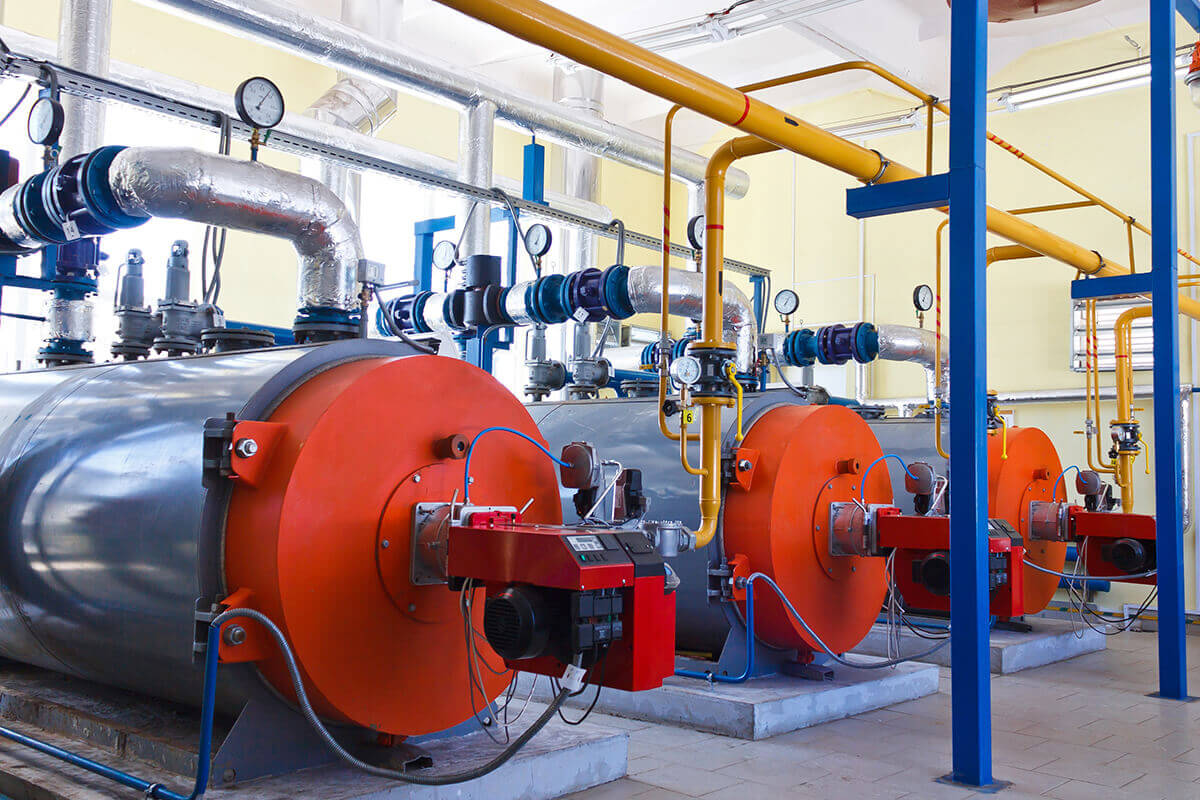

The High-Stakes Heating Decision
In commercial buildings, heating is one of the most significant and challenging operating costs to control. Rising gas prices, tightening carbon targets, and increasing scrutiny on energy performance have forced many organisations to re-evaluate how their heating systems operate — and whether their existing boilers are still fit for purpose.
When faced with escalating energy bills or an ageing plant, boiler replacement is often seen as the default solution. New equipment promises higher efficiency, lower emissions, and improved reliability. However, replacement comes with significant capital costs, long project timelines, and operational disruption — and it does not always guarantee the performance improvements decision-makers expect.
An alternative approach is boiler optimisation. Rather than replacing assets outright, optimisation focuses on improving how existing boilers actually operate in real-world conditions. By addressing control strategies, system behaviour, and inefficiencies that develop over time, optimisation can deliver meaningful cost and carbon savings without significant capital investment.
This raises an essential question for estates teams, facilities managers, and finance directors alike: is it better to optimise existing boilers, or replace them entirely? This article explores both options, comparing cost, performance, risk, and sustainability impact to help organisations make informed, data-led investment decisions.
Understanding the Two Approaches
What Is Boiler Optimisation?
Boiler optimisation is the process of improving the performance and efficiency of existing boiler systems by focusing on how they operate day to day, rather than replacing the physical equipment itself.
In commercial buildings, boilers are rarely operating at their design efficiency. Over time, changes in occupancy, building use, weather patterns, and control settings can cause systems to drift away from optimal performance. Boilers may short-cycle, operate at unnecessarily high temperatures, or run for longer than required — all of which increase fuel consumption and emissions.
Optimisation addresses these issues by leveraging data and intelligent control to adjust boiler operation in response to real-time conditions continuously. This can include refining flow and return temperatures, improving load matching, reducing unnecessary run hours, and ensuring boilers respond dynamically to demand. The result is a system that works smarter, not harder, delivering lower gas consumption and improved efficiency without replacing core assets.
What Does Boiler Replacement Involve?
Boiler replacement is a more traditional approach to improving heating efficiency and typically involves removing existing boilers and installing new, higher-efficiency units. In many cases, replacement projects also include upgraded controls, pipework modifications, plant room alterations, and compliance-related improvements.
While modern boilers can offer improved theoretical efficiency, replacement is a capital-intensive project. It often requires significant upfront investment, extended planning, and coordination with contractors and building users. Depending on the scale of the system, replacement can result in temporary heating outages, restricted access to plant rooms, and disruptions to normal operations.
Importantly, new boilers do not automatically operate efficiently once installed. Without effective control strategies and ongoing performance monitoring, even the most modern equipment can underperform in practice. As a result, replacement addresses the condition of the asset, but not necessarily how well the system is managed over time.
Cost Comparison – CAPEX, OPEX and Payback
Upfront Costs and Budget Impact
One of the most significant differences between boiler optimisation and boiler replacement is the level of upfront investment required. Boiler replacement is a capital-intensive project, often involving not only the cost of new boilers but also installation, commissioning, control upgrades, and associated plant room works. For large commercial or multi-site estates, this can represent a substantial capital commitment that competes with other priorities.
In contrast, boiler optimisation typically requires far lower upfront spend. Because the existing boiler plant remains in place, costs are focused on improving system control, performance monitoring, and operational efficiency rather than physical replacement. For organisations working within tight capital budgets or facing approval constraints, this lower barrier to entry can make optimisation a more accessible and achievable option.
Budget impact also extends beyond the initial invoice. Capital projects often require long lead times, procurement processes, and internal approvals, whereas optimisation measures can usually be implemented more quickly, allowing savings to begin sooner.
Operating Costs and Ongoing Savings
Beyond initial costs, decision-makers must consider how each approach affects ongoing operating expenditure. Boiler replacement can reduce fuel consumption if older, inefficient equipment is removed, but real-world savings depend heavily on how the new system is controlled and operated over time. Without effective optimisation, performance can quickly drift away from expected levels.
Boiler optimisation directly targets operating costs by addressing inefficiencies that drive unnecessary gas usage. By improving load matching, reducing excessive flow temperatures, and eliminating wasted run hours, optimisation reduces fuel consumption day after day. This can lead to consistent, measurable savings without increasing maintenance complexity.
Maintenance costs are also an essential factor. Replacement may reduce short-term maintenance issues associated with ageing plant, but it introduces new components that still require servicing and correct configuration. Optimisation, meanwhile, can reduce wear on existing boilers by minimising short-cycling and inefficient operation, potentially extending asset life while lowering energy spend.
Payback Periods and Return on Investment
Payback period is often a decisive factor in heating investment decisions. Boiler replacement projects typically have longer payback times due to their high capital cost, even when long-term savings are significant. In some cases, payback may extend well beyond typical internal investment thresholds.
Boiler optimisation usually offers shorter payback periods because savings are achieved without significant capital outlay. Lower upfront costs combined with immediate reductions in fuel use can result in faster returns, making optimisation particularly attractive for organisations seeking quick, low-risk improvements.
For many commercial buildings, the question is not which option delivers the highest theoretical efficiency, but which delivers verifiable savings within acceptable financial timescales. In this context, optimisation often provides a compelling return on investment, either as a standalone measure or as a first step before considering replacement.
Carbon, Compliance and Sustainability Considerations
Carbon Reduction Without Asset Replacement
As organisations face increasing pressure to reduce emissions, heating systems are often a key focus area. In commercial buildings, gas-fired boilers can account for a significant proportion of total carbon output, making them central to any decarbonisation strategy.
Boiler replacement is often presented as a carbon-reduction measure, particularly when older equipment is replaced with modern, higher-efficiency units. While this can reduce emissions, it also comes with embedded or embodied carbon associated with manufacturing, transporting, and installing new equipment. For organisations seeking immediate reductions, this embodied impact can delay the achievement of net carbon benefits.
Boiler optimisation offers a different route. By reducing gas consumption through improved control and operational efficiency, optimisation can deliver immediate emissions savings without introducing new physical assets. Lower fuel use directly translates into lower carbon output, allowing organisations to demonstrate progress against sustainability targets quickly and with minimal disruption.
Supporting Net Zero, ESOS and SECR Goals
Beyond headline carbon reduction, many organisations must demonstrate compliance with energy and carbon reporting frameworks. Boiler optimisation can play a valuable role in supporting these requirements by providing measurable, data-led improvements in heating performance.
For organisations subject to energy assessments and reporting obligations, optimisation data can help evidence reduced consumption and improved system efficiency. This supports broader sustainability strategies and provides a clear justification for heating-related decisions in audits, reports, and internal governance processes.
Boiler replacement, while potentially beneficial in the long term, often sits within a multi-year capital programme. Optimisation can bridge the gap by delivering short-term reductions while longer-term decarbonisation plans are developed. In many cases, it also improves understanding of how heating systems perform in practice, helping organisations plan future investments more effectively and avoid over- or under-specifying replacement systems.
Aligning Short-Term Action with Long-Term Strategy
A common challenge for estates and energy teams is balancing immediate carbon reduction with long-term transformation. Replacing boilers may align with future net-zero pathways, but budget constraints, operational risks, and timing can delay implementation.
Optimisation allows organisations to take action now. By improving efficiency and reducing emissions from existing systems, it supports a phased approach to decarbonisation. This can include short-term optimisation, followed by system upgrades or replacement when budgets, technology, and infrastructure are better aligned.
In this way, boiler optimisation is not a compromise, but a strategic step that enables progress while preserving flexibility for future heating solutions.
Risk, Disruption and Operational Impact
Business Disruption and Downtime
Operational disruption is often one of the most underestimated factors in heating investment decisions. Boiler replacement projects typically require planned shutdowns, restricted access to plant rooms, and coordination with multiple contractors. In occupied commercial buildings — such as offices, universities, healthcare settings, or mixed-use sites — even brief periods without reliable heating can significantly affect comfort, productivity, and service delivery.
The scale of disruption increases with system complexity. Larger estates may require phased installation, temporary heating solutions, or out-of-hours works, all of which add to costs and logistical risks. These factors are rarely captured fully in headline project budgets but can influence stakeholder confidence and internal approval.
Boiler optimisation, by comparison, is far less disruptive. Because the existing plant remains in place, improvements are made without removing or replacing core equipment. Optimisation measures are typically implemented while systems remain operational, avoiding downtime and minimising impact on building users. For organisations where continuity of service is critical, this lower operational risk can be a decisive advantage.
Performance Risk and Uncertainty
Another key consideration is performance risk — the gap between expected and actual outcomes. Boiler replacement is often justified based on improved efficiency ratings, but these figures are based on laboratory conditions rather than real-world operation. Once installed, new boilers still depend on proper configuration, control strategies, and ongoing management.
Without adequate monitoring and optimisation, new systems can underperform, operating at higher temperatures than necessary or failing to respond to changes in demand. In these cases, the anticipated energy and carbon savings may not materialise, despite the significant capital investment.
Optimisation directly addresses this uncertainty by focusing on how boilers behave in practice. Rather than assuming performance, it continuously measures and adjusts operations. This reduces the risk of underperformance and ensures that efficiency improvements are sustained over time. For decision-makers, this data-led approach provides greater confidence that savings are tangible, measurable, and repeatable.
Managing Asset Life and Operational Resilience
Risk is not limited to installation and performance — it also includes asset longevity and resilience. Replacing boilers prematurely can lock organisations into new systems that may not align with future heating strategies or evolving regulatory requirements.
Optimisation helps mitigate this risk by extending the useful life of existing assets. By reducing short-cycling, excessive temperatures, and inefficient run patterns, optimisation can lower mechanical stress on boilers and associated components. This can improve reliability, reduce unplanned maintenance, and provide breathing space to plan longer-term upgrades more strategically.
For many organisations, reducing operational risk is as important as reducing energy costs. In this context, boiler optimisation offers a low-risk way to improve performance today while maintaining flexibility for future decisions.
When Boiler Replacement Is the Right Choice
While boiler optimisation can deliver high cost and carbon savings in many commercial buildings, there are situations where boiler replacement is the most appropriate course of action. Recognising these scenarios is essential to making a well-informed, defensible investment decision.
One clear indicator is end-of-life equipment. Boilers that are no longer reliable, cannot be supported with replacement parts, or present safety risks may need to be replaced regardless of optimisation potential. In these cases, maintaining existing assets can introduce unacceptable operational and compliance risks.
Replacement may also be necessary where system capacity no longer meets building requirements. Changes in building use, extensions, or major refurbishments can increase heating demand beyond the capacity of the existing boiler plant. If the system is fundamentally undersized or incompatible with future operational needs, optimisation alone will not resolve these constraints.
Regulatory or safety requirements can also drive replacement. Where legislation, insurance conditions, or safety standards require plant upgrades that cannot be achieved through optimisation, replacement becomes unavoidable.
Importantly, even in these scenarios, optimisation still has a role to play. Optimising existing systems before replacement can reduce energy waste in the short term and provide valuable performance data. After installation, optimisation ensures that new boilers operate efficiently in real-world conditions, helping organisations protect their investment and avoid repeating past inefficiencies.
A Smarter Decision Framework for Commercial Buildings
Choosing between boiler optimisation and boiler replacement should not be based on assumptions, manufacturer claims, or default approaches. Instead, it should be driven by data, operational realities, and a clear understanding of organisational priorities.
Before committing to a significant heating investment, decision-makers should ask several key questions. Is the existing boiler plant genuinely inefficient, or is it being operated inefficiently? Do you have visibility over real-world performance, fuel usage, and system behaviour? Are rising energy costs the result of ageing equipment, or poor control and configuration?
It is also vital to consider timescales. If the priority is rapid cost and carbon reduction, long replacement projects may delay the delivery of benefits. Optimisation can often deliver measurable improvements quickly, helping organisations stabilise energy performance while longer-term plans are developed.
In many cases, boiler optimisation represents a logical first step rather than an alternative to replacement. By improving performance and gathering operational data, optimisation helps organisations understand what they truly need from future heating systems. This reduces the risk of premature or oversized replacement projects and ensures capital investment is made at the right time, for the right reasons.
Making an Informed Heating Investment
For commercial buildings under pressure to cut costs, reduce emissions, and manage operational risk, the choice between boiler optimisation and boiler replacement is rarely straightforward. Replacement can deliver long-term benefits where systems are no longer viable, but it comes with high capital costs, disruption, and uncertainty around real-world performance.
Boiler optimisation offers a lower-risk, lower-cost route to improving efficiency by focusing on how existing systems actually operate. For many organisations, it delivers faster payback, immediate carbon reductions, and the operational insight needed to make better long-term decisions.
This is where solutions like Optiburner play an essential role. By continuously optimising boiler performance with real-time data, Optiburner helps organisations reduce energy waste, lower emissions, and improve heating efficiency without replacing existing assets. Crucially, it also provides the performance visibility needed to decide if and when boiler replacement is genuinely required.
Ultimately, the right heating investment is not about choosing optimisation or replacement by default, but about using data to understand system performance and align decisions with financial, operational, and sustainability goals. For many commercial buildings, optimisation is the most practical and informed place to start.